

Concept

CALIBRA’s concept was first born in 2006, when the advantages and numerous research opportunities and collaborations offered by the operation of an ion beam accelerator in a unique multidisciplinary scientific environment like that of NCSR “Demokritos” (NCSRD) became evident. Such an environment has been successfully established over the years at “Demokritos” through the coexistence of Nuclear Physics and Nuclear Technology with Biosciences, Materials Science, Environmental research, Cultural Heritage studies, Radiobiology and Radiopharmacy. Operating a “Cluster of Accelerator Laboratories for Ion-Beam Research and Applications” in this scientific environment could contribute successfully to the overall scientific programme of “Demokritos” by providing ion beams and secondary neutrons not only for fundamental nuclear physics research but also for a wide spectrum of highly-specialized accelerator-based analytical services.

CALIBRA was independently motivated by the host of accelerator-based applications ranging from medical therapy to the analysis of artefacts and the wide spectrum of fundamental research ranging from the exploitation of the nature of matter to the understanding of the evolution of the Universe. On top of that, the ever-increasing installation of ion-beam accelerators around the world is a clear proof of their contribution to the economic development of a country and their importance for solving problems of large social impact. For all these reasons, Greece should not be deprived of an accelerator-based Research Infrastructure (RI). It is worth mentioning, that at the time the idea for CALIBRA was born, Greece, despite its unprecedented rich cultural heritage, did not have an Accelerator Mass Spectrometry facility. Moreover, “Demokritos”, the largest Greek research center, despite its long experience in radioisotopes and its unique specialization in the study and development of new radiopharmaceuticals, never had a cyclotron at its disposal, despite some occasional efforts made from time to time to obtain such a scientific tool, unique for the country.

The full proposal for the establishment and operation of the CALIBRA National Research Infrastructure (NRI) was submitted to GSRT in July 2013. In this document, the Full-Scale CALIBRA NRI, an integrated research infrastructure based on five accelerators was proposed.

The core idea behind CALIBRA is to take advantage of a wide variety of ion species delivered from a cluster of accelerators, partly with very high intensity, as well as of secondary neutron beams in order to produce new scientific knowledge in fundamental science (nuclear astrophysics, nuclear reaction studies and atomic physics with accelerators), develop novel analytical techniques and provide highly specialized services and products related to human health, cultural heritage, nanotechnology, environmental monitoring, and the development and testing of advanced materials and detectors.

The CALIBRA NRI shall operate as an open-access Research Infrastructure for national and European research groups, providing annually with around 4000 hours of beam time and a wide spectrum of state-of-the-art facilities for R&D and innovative applications, education and training for students. CALIBRA aims also at linking the local scientific community to ESFRI Infrastructures and other European large- or similar-scale accelerator facilities. CALIBRA shall also provide irradiation and analytical services to public and private sectors contributing this way to the increase of competitiveness of Greek economy. The core idea of the full-scale CALIBRA Research Infrastructure is schematically shown in figure 1.
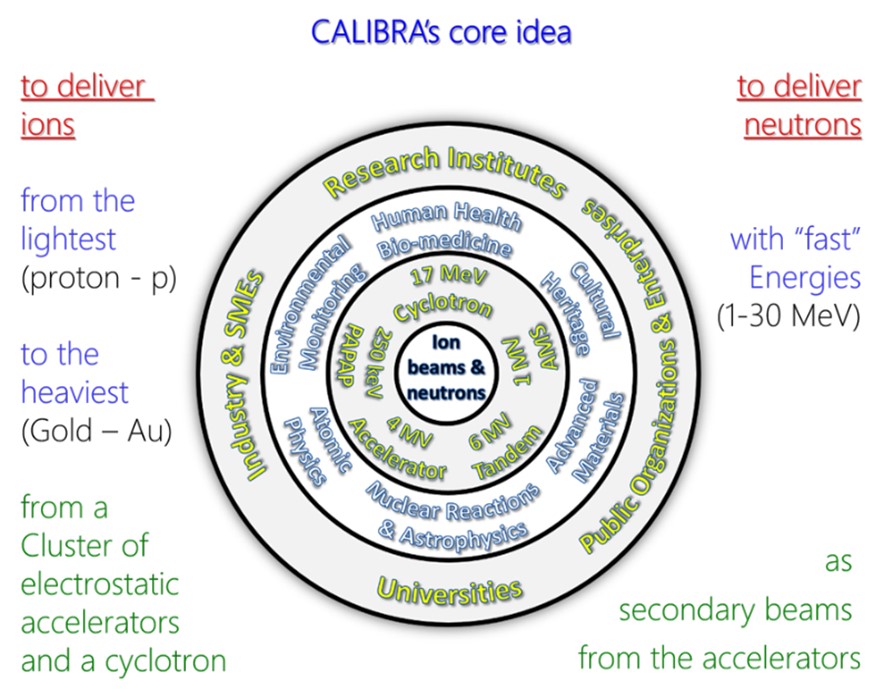
Figure 1: The core idea of the Full-Scale CALIBRA National Research Infrastructure as proposed in July 2013.

The need for operating a NRI like CALIBRA is justified by the plethora of inter-disciplinary applications with direct impact on society that were gradually triggered during the last decades by the use of accelerators, almost independently of their physical dimensions. Up to date, sound interfaces between nuclear physics and other scientific areas have been developed capable of contributing to the solution of major problems humankind faces in nowadays. A bright paradigm is the multi-level interplay between nuclear physicists, radio-biologists and medical doctors that has led to the development of methods, instruments and facilities with a large impact on the health-care system; one of the many proofs is the positron emission tomography (PET) systems that are widely used in medicine diagnostics, notably in oncology. Apart from their basic research- and development-driven features, many accelerator facilities provide very specialized services to the private sector contributing thus to the increase of competitiveness of the local economies. As a result, it is widely accepted that the operation of state-of-the-art accelerator laboratories in a country plays a key role towards creation of a Knowledge Society and Smart Specialization. As a consequence, accelerator-based research is enhanced at the national or regional level and many European countries fund the operation of more than one accelerator laboratory in order to enhance innovation by covering the increased and often very diverse needs of the local research communities.

In addition to the aforementioned arguments, it is worth noting that in Greece, the demand for accelerated ion beams is not negligible at all: a realistic estimation of the beam time necessary to serve the local needs for ion beam irradiations yields a total number of at least 4000 hours per year from which more than 70% refer to applications related to environmental studies, analysis of cultural heritage objects, development of new materials and sensors, testing of new detectors under charged particle or neutron irradiations, studies relevant to human health and many more. In these numbers, the beam time needs for radioisotope production for the needs of medical use, especially in oncology, is not taken into consideration. This holds also for beam-time requests related to services to the public or private sector. To date, a good part of the local demand for accelerated ion beams is covered by the ΤANDEM Accelerator Laboratory (TAL), a unique research infrastructure in Greece, installed at the Institute of Nuclear and Particle Physics of the NCSR “Demokritos”.

As of today, the Tandem Accelerator Laboratory has accumulated a total investment of more than 10 million Euros in nuclear instrumentation. In addition, the existing building hosting this laboratory is a special civil structure built according to the international regulations to shield against ionizing radiation. Its current value corresponds to a capital investment of at least 10 million Euros. Furthermore, the costs for purchasing a cyclotron, including all supporting instrumentation plus a state-of-the art target system for PET radioisotope production are estimated as 2 million Euros, at least. Hence, the donation of a 17 MeV PET Cyclotron from the Dutch University Medical Center Groningen (UMCG) is an extra budgetary source for the national research system. To these, one could add another 2 million Euros, at least, if it is to acquire a 2.5 MV Tandetron Accelerator for Accelerator Mass Spectrometry (AMS), like the one donated in 2019 by the Institute of Archaeology of the University of Oxford, UK.

The AMS facility for radio-carbon dating which was included in the full-scale CALIBRA NRI will be a first-of-its-kind facility in Greece, a country with an unprecedented rich cultural heritage. The operation of an AMS facility is awaited since many years from the Greek scientific community, who is obliged to seek and pay a large number of AMS-based services abroad (more than 500 samples/year). Similar arguments apply to the case of the PET Cyclotron.

Under these conditions, the establishment and operation of the proposed Full-Scale CALIBRA RI is not an infrastructure to be bult from scratch. On the contrary, the CALIBRA NRI takes advantage of a capital investment of at least 25 million Euros from which the local research and academic community as well as public and private enterprises can benefit the most.